


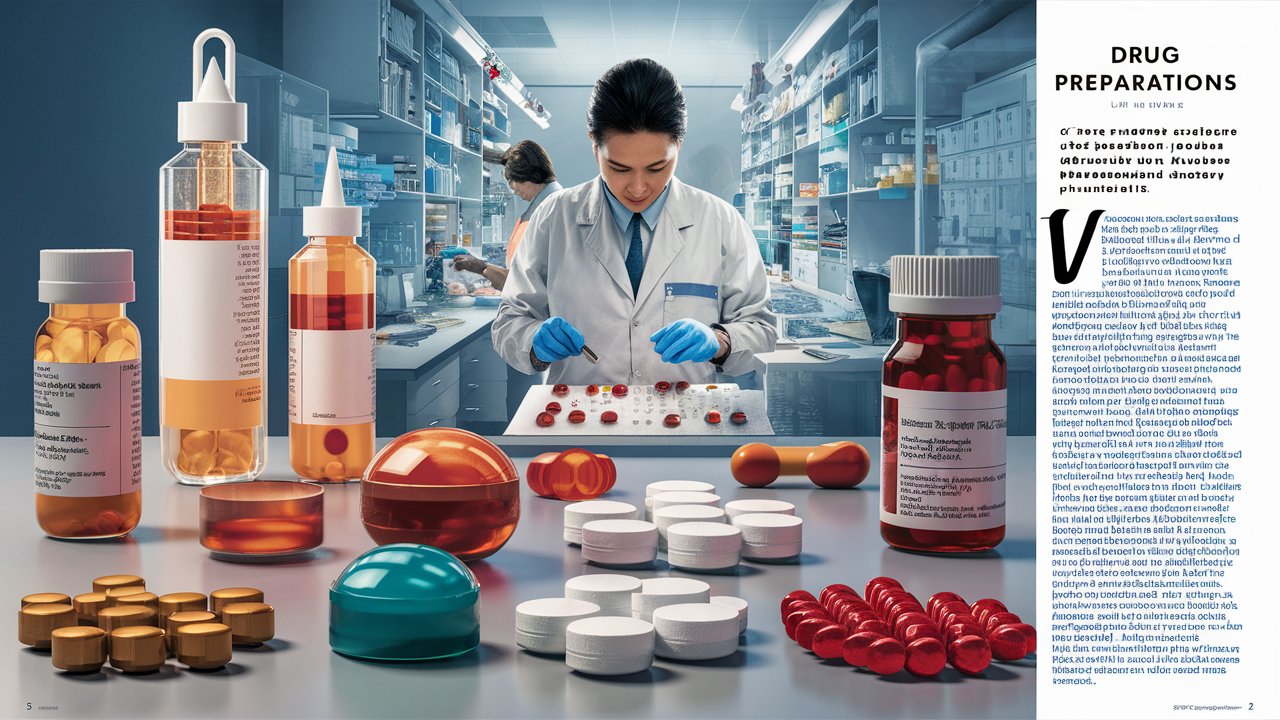
Drug preparations form the foundation of modern medicine, transforming raw chemical substances into safe, effective, and convenient forms for patient use. The process of drug preparation involves a combination of pharmaceutical science, chemistry, and technology to ensure that each medication delivers the desired therapeutic effect. Understanding the various types of drug preparations, their methods of formulation, and their significance in healthcare is essential for pharmacists, medical professionals, and students of pharmaceutical sciences.
1. Understanding Drug Preparations
Drug preparations refer to the process of converting active pharmaceutical ingredients (APIs) into dosage forms suitable for administration. These preparations can be solid, liquid, semi-solid, or gaseous, depending on the route of administration and the nature of the drug. The goal of drug preparation is to create a stable, effective, and patient-friendly product that delivers the correct dose of medication. Factors such as solubility, stability, bioavailability, and patient compliance play a crucial role in determining the type of preparation used. Pharmaceutical scientists carefully design formulations to ensure that the drug remains effective throughout its shelf life and reaches the target site in the body efficiently.
2. Types of Drug Preparations
Drug preparations are broadly classified into several categories based on their physical form and route of administration. Each type has unique characteristics and applications in medical treatment.
a. Solid Preparations
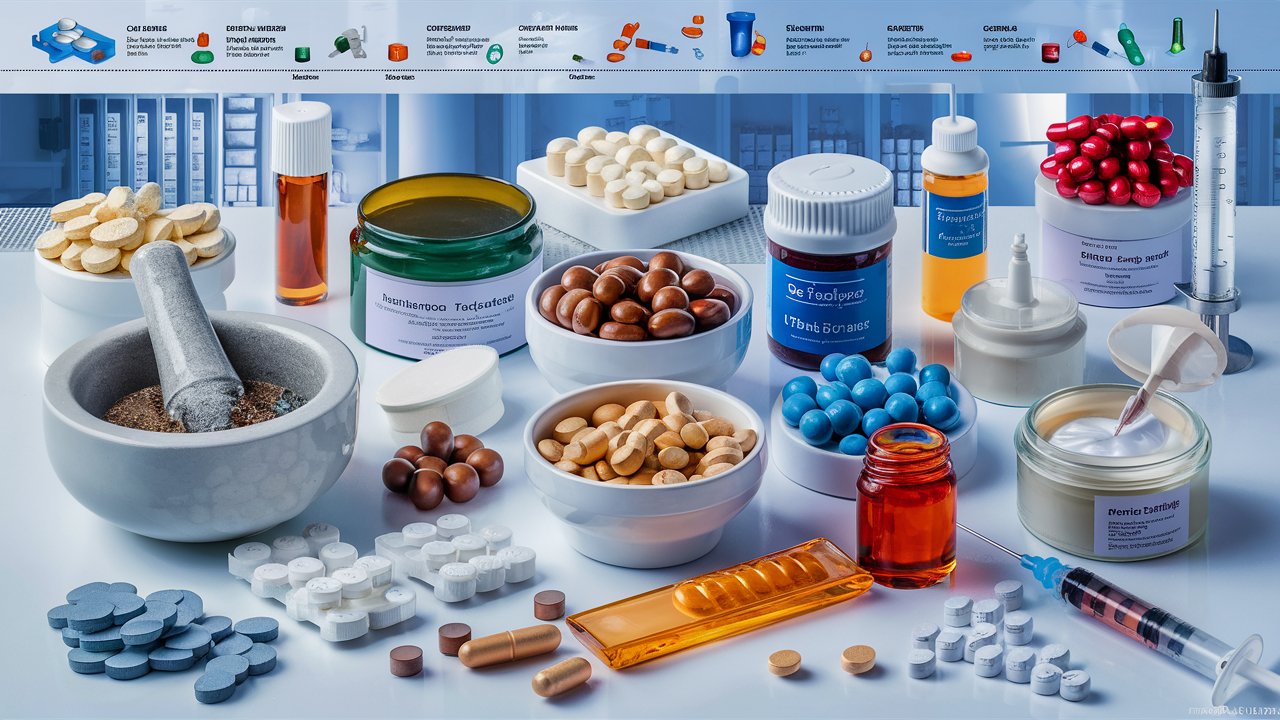
Solid drug preparations include tablets, capsules, powders, and granules. Tablets are the most common form due to their convenience, stability, and ease of dosage control. Capsules, on the other hand, are preferred for drugs with unpleasant tastes or odors, as the gelatin shell masks these properties. Powders and granules are often used for reconstitution into solutions or suspensions before administration. Solid preparations are generally more stable than liquid forms and have longer shelf lives.
b. Liquid Preparations
Liquid drug preparations include solutions, suspensions, syrups, and emulsions. These forms are ideal for patients who have difficulty swallowing tablets, such as children and the elderly. Solutions contain dissolved active ingredients, while suspensions contain finely divided drug particles dispersed in a liquid medium. Syrups are sweetened solutions used to mask the taste of bitter drugs, and emulsions are mixtures of oil and water used for drugs that are insoluble in water. Proper formulation ensures uniform distribution of the drug and prevents degradation.
c. Semi-Solid Preparations
Semi-solid drug preparations include ointments, creams, gels, and pastes. These are primarily used for topical application on the skin or mucous membranes. Ointments are greasy and provide a protective barrier, while creams are less oily and more cosmetically acceptable. Gels are water-based and provide a cooling effect, making them suitable for burns and inflammation. Semi-solid preparations allow localized drug delivery, minimizing systemic side effects.
d. Parenteral Preparations
Parenteral drug preparations are sterile formulations administered through injection or infusion. They include intravenous, intramuscular, and subcutaneous injections. These preparations are used when rapid drug action is required or when oral administration is not possible. Parenteral formulations must be sterile, pyrogen-free, and isotonic to prevent adverse reactions. The preparation process involves strict aseptic techniques and quality control measures.
e. Inhalation Preparations
Inhalation drug preparations deliver medication directly to the respiratory tract. They include aerosols, inhalers, and nebulizer solutions. These forms are commonly used for treating respiratory conditions such as asthma and chronic obstructive pulmonary disease (COPD). Inhalation preparations provide rapid onset of action and minimize systemic side effects by targeting the lungs directly.
3. Methods of Drug Preparation
The preparation of drugs involves several scientific and technical processes to ensure quality, safety, and efficacy. Common methods include:
- Mixing and Blending: Ensures uniform distribution of active and inactive ingredients.
- Granulation: Converts powders into granules to improve flow properties and compressibility.
- Sterilization: Eliminates microorganisms from parenteral and ophthalmic preparations.
- Encapsulation and Coating: Protects drugs from environmental factors and controls release rates.
- Lyophilization (Freeze-Drying): Used for heat-sensitive drugs to enhance stability and shelf life.
Each method is selected based on the drug’s chemical properties, intended use, and desired release profile.
4. Importance of Quality Control in Drug Preparations
Quality control is a critical aspect of drug preparation, ensuring that every batch meets established standards for purity, potency, and safety. Analytical testing, stability studies, and microbial assessments are conducted to verify the quality of the final product. Regulatory authorities such as the World Health Organization (WHO) and national drug control agencies enforce strict guidelines for manufacturing practices. Adherence to Good Manufacturing Practices (GMP) ensures that drugs are consistently produced and controlled according to quality standards, minimizing risks to patients.
5. Role of Pharmacists in Drug Preparations
Pharmacists play a vital role in the preparation, compounding, and dispensing of drugs. They ensure that formulations are prepared accurately, stored properly, and administered safely. In hospital and community settings, pharmacists may also prepare customized formulations for patients with specific needs, such as pediatric or geriatric patients. Their expertise in pharmacology and formulation science contributes significantly to the safe and effective use of medications.
Conclusion
Drug preparations are the cornerstone of pharmaceutical science, bridging the gap between chemical compounds and therapeutic medicines. The process involves meticulous formulation, testing, and quality assurance to ensure that each drug is safe, effective, and suitable for patient use. Understanding the various types and methods of drug preparation enhances the ability to develop innovative dosage forms that improve patient compliance and treatment outcomes. As pharmaceutical technology continues to advance, the future of drug preparations promises even greater precision, safety, and efficacy in healthcare delivery.
Frequently Asked Questions (FAQ)
1. What are drug preparations?
Drug preparations are processes that convert active pharmaceutical ingredients into dosage forms suitable for administration, such as tablets, syrups, or injections.
2. Why are different types of drug preparations needed?
Different types are required to accommodate various routes of administration, patient preferences, and drug properties, ensuring optimal therapeutic effects.
3. What is the difference between tablets and capsules?
Tablets are compressed solid forms of medication, while capsules contain the drug enclosed in a gelatin shell, often used to mask taste or control release.
4. What are parenteral preparations?
Parenteral preparations are sterile formulations administered by injection or infusion, bypassing the digestive system for rapid drug action.
5. How is quality control maintained in drug preparations?
Quality control involves rigorous testing for purity, potency, stability, and sterility, following Good Manufacturing Practices (GMP) and regulatory standards.