



A dead jump start car battery can happen to anyone, often at the most inconvenient time. Whether it’s due to leaving the headlights on overnight, cold weather, or an aging battery, knowing how to jump start a car is an essential skill for every driver. This guide provides a detailed explanation of how to safely and effectively jump start car start a car, what tools are needed, common mistakes to avoid, and how to prevent future battery problems. By understanding the process and following the right steps, it’s possible to get back on the road quickly and safely without causing damage to the vehicle’s electrical system.
What Is Jump Starting a Car?
Jump starting a car is the process of using an external power source, usually another vehicle’s battery or a portable jump starter, to provide enough electrical current to start a car with a dead or weak battery. The process involves connecting jumper cables between the two batteries in a specific order to safely transfer power. Once the dead battery receives enough charge, the engine can start, and the alternator will begin recharging the battery.
Tools Needed to Jump Start a Car
To jump start a car, a few essential tools are required. The most common is a set of jumper cables, which are heavy-duty insulated wires with clamps on both ends. These cables connect the positive and negative terminals of the two batteries. Another option is a portable jump starter, a compact device that stores electrical energy and can start a car without another vehicle. It’s also important to have protective gloves and safety glasses to prevent injury from sparks or battery acid.
Step-by-Step Guide to Jump Starting a Car
- Position the Vehicles – Park the working vehicle close enough to the car with the dead battery so the jumper cables can reach both batteries. Turn off both engines and engage the parking brakes.
- Locate the Battery Terminals – Identify the positive (+) and negative (–) terminals on both batteries. The positive terminal is usually red, while the negative is black.
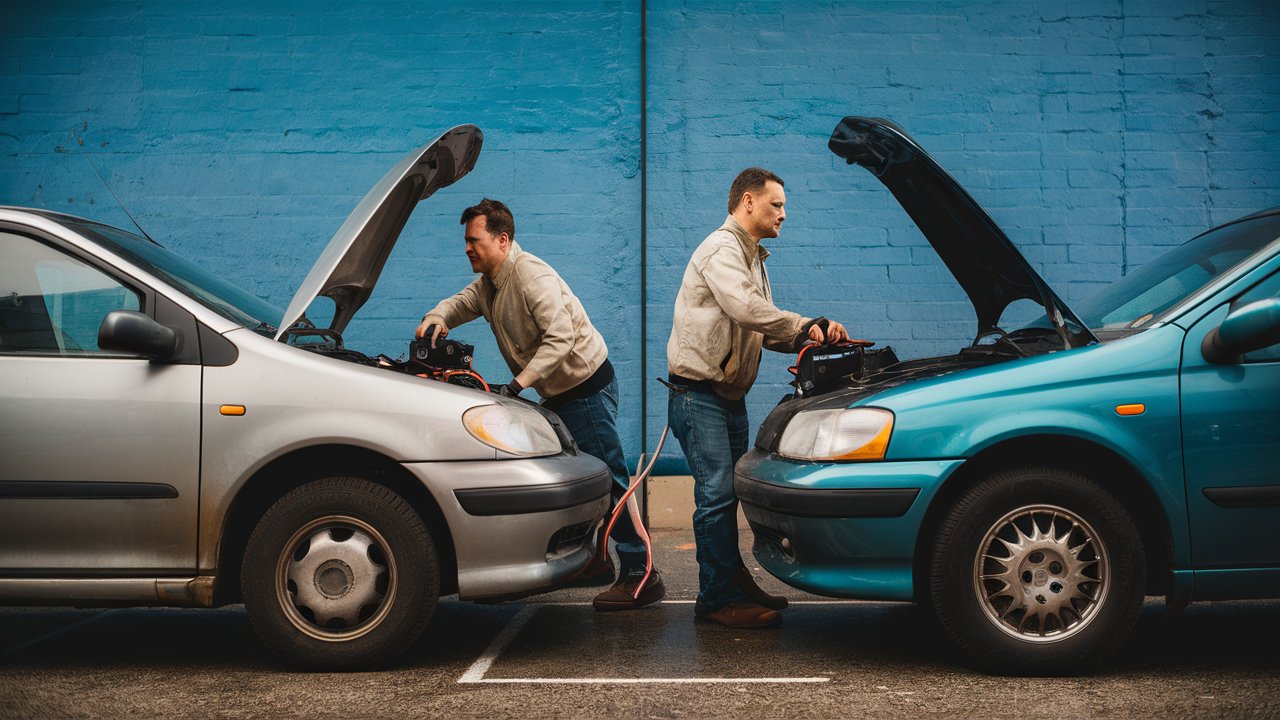
- Connect the Jumper Cables – Attach one red clamp to the positive terminal of the dead battery, then connect the other red clamp to the positive terminal of the working battery. Next, attach one black clamp to the negative terminal of the working battery and the other black clamp to an unpainted metal surface on the engine block or frame of the car with the dead battery.
- Start the Working Vehicle – Let the engine run for a few minutes to allow the dead battery to charge.
- Start the Dead Vehicle – Try starting the car with the dead battery. If it doesn’t start, wait a few more minutes and try again.
- Remove the Cables in Reverse Order – Once the car starts, carefully remove the cables in the reverse order of connection.
- Let the Engine Run – Keep the engine running for at least 15–20 minutes to allow the alternator to recharge the battery.
Common Mistakes to Avoid When Jump Starting a Car
Many drivers make simple but costly mistakes when jump starting a car. One of the most common errors is connecting the cables in the wrong order, which can cause sparks, short circuits, or even battery explosions. Another mistake is allowing the clamps to touch each other while connected to a power source, which can lead to electrical damage. It’s also important not to jump start a frozen or leaking battery, as this can be extremely dangerous. Always check the battery for visible damage before attempting a jump start.
How to Jump Start a Car Without Another Vehicle
If another vehicle isn’t available, a portable jump starter can be used. These devices are compact, rechargeable, and easy to use. Simply connect the clamps to the battery terminals as directed, turn on the jump starter, and start the car. Portable jump starters are especially useful for emergencies and can also charge phones or other devices.
Preventing Future Battery Problems
To avoid frequent jump start car starts, regular battery maintenance is essential. Check the battery terminals for corrosion and clean them with a mixture of baking soda and water if necessary. Ensure the battery is securely mounted and that the alternator is functioning properly. Avoid leaving lights or electronics on when the engine is off, and consider replacing the battery every three to five years depending on usage and climate conditions.
Conclusion
Knowing how to jump start car a car is a valuable skill that can save time, money, and stress during unexpected breakdowns. By following the correct steps, using the right tools, and practicing safety precautions, it’s possible to revive a dead battery quickly and safely. Regular maintenance and awareness of battery health can also help prevent future issues, ensuring that the vehicle remains reliable in all conditions.
Frequently Asked Questions
1. How long should a car run after being jump started?
A car should run for at least 15 to 30 minutes after being jump started to allow the alternator to recharge the battery fully.
2. Can jump starting damage a car?
If done incorrectly, jump starting can cause electrical damage or battery failure. Always connect the cables in the correct order and avoid letting the clamps touch.
3. What if the car doesn’t start after a jump?
If the car doesn’t start after several attempts, the battery may be completely dead or there could be another issue such as a faulty alternator or starter.
4. Can a car battery recharge itself?
A car battery cannot recharge itself without the help of the alternator or an external charger. Once the engine is running, the alternator recharges the battery.
5. How often should a car battery be replaced?
Most car batteries last between three to five years, but extreme temperatures and frequent short trips can shorten their lifespan. Regular testing can help determine when replacement is needed.