


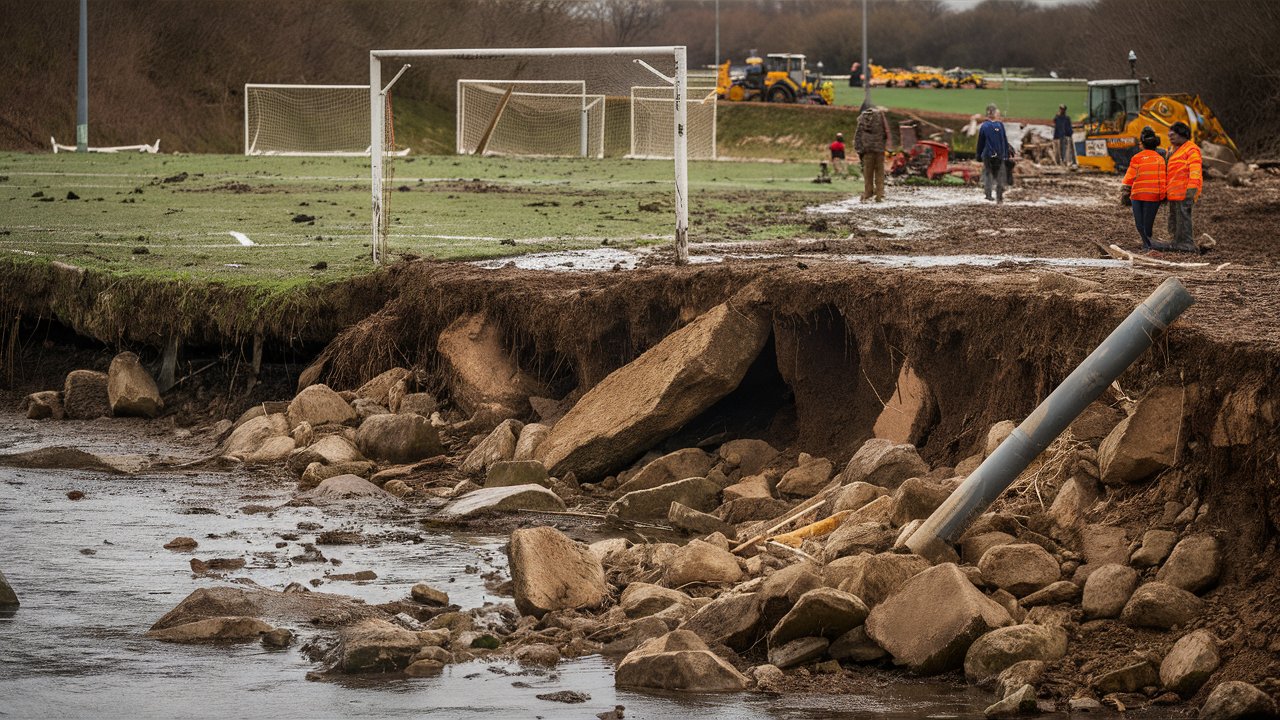
The riverbank collapse iford playing fields has become a significant environmental and community concern, drawing attention from local authorities, environmental experts, and residents alike. This incident highlights the growing challenges of riverbank erosion, climate change, and land management in urban green spaces. Iford Playing Fields, a popular recreational area located near the River Stour, has long been a cherished spot for sports, leisure, and community gatherings. Understanding the causes, consequences, and potential solutions to this issue is essential for preventing similar events in the future and preserving the ecological and social value of this important area.
1. Understanding the Riverbank Collapse at Iford Playing Fields
The riverbank collapse iford playing fields refers to the sudden and severe erosion of the river’s edge, resulting in the loss of soil, vegetation, and parts of the playing field area. This type of collapse typically occurs when the natural stability of the riverbank is compromised by a combination of environmental and human factors. Over time, the constant flow of water weakens the soil structure, leading to cracks and eventual slippage. The collapse not only affects the physical landscape but also disrupts the recreational use of the fields, posing safety risks to visitors and damaging local biodiversity.
2. Causes of the Riverbank Collapse
Several factors contributed to the riverbank collapse at Iford Playing Fields, with natural processes and human activities both playing a part. One of the primary causes is river erosion, a natural process where the continuous flow of water gradually wears away the soil and vegetation along the river’s edge. However, recent years have seen an increase in extreme weather events, including heavy rainfall and flooding, which accelerate this process. Soil instability is another critical factor, as saturated ground loses its ability to hold together under pressure. Additionally, human interventions such as construction, drainage modifications, and vegetation removal can further destabilize the riverbank.
3. Environmental and Community Impact
The impact of the riverbank collapse at Iford Playing Fields extends far beyond the immediate physical damage. Environmentally, the collapse has led to the loss of vegetation that once stabilized the soil and supported local wildlife. The erosion has also increased sediment levels in the river, affecting water quality and aquatic habitats. For the community, the collapse has restricted access to parts of the playing fields, limiting recreational activities and raising safety concerns. Local sports teams, families, and visitors who frequent the area have been directly affected by the closure of certain sections. Moreover, the incident has sparked discussions about the need for better environmental management and infrastructure resilience in public spaces.
4. Restoration and Prevention Efforts
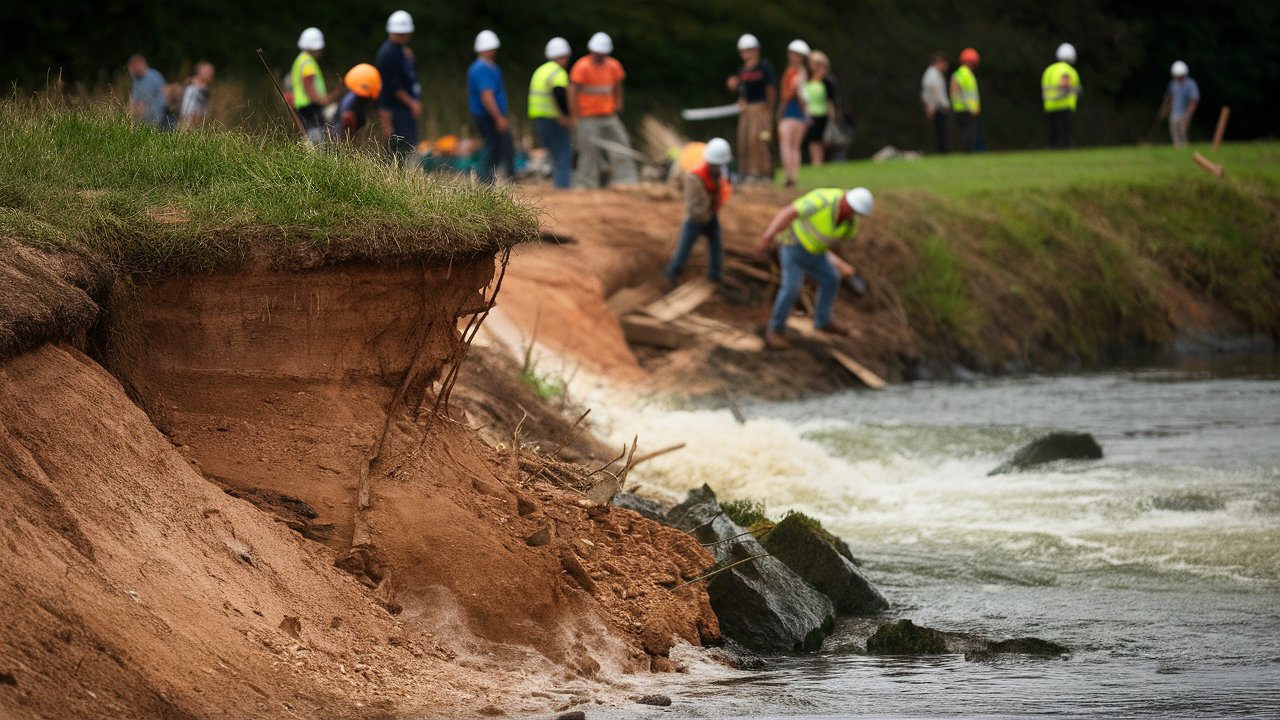
In response to the riverbank collapse at Iford Playing Fields, local authorities and environmental organizations have initiated several restoration and prevention efforts. Engineers and ecologists are working together to stabilize the affected areas using a combination of natural and structural solutions. Techniques such as bioengineering, which involves planting deep-rooted vegetation to reinforce the soil, are being implemented alongside traditional methods like retaining walls and gabion baskets. Long-term prevention strategies include improving drainage systems, monitoring water flow, and promoting sustainable land use practices. Community involvement is also a key component, as local volunteers and environmental groups participate in tree planting and awareness campaigns to protect the area from future erosion.
5. The Role of Climate Change in Riverbank Erosion
The riverbank collapse at Iford Playing Fields serves as a stark reminder of how climate change is reshaping local environments. Increased rainfall intensity, unpredictable weather patterns, and rising river levels are all linked to global climate shifts. These changes place additional stress on riverbanks, making them more vulnerable to erosion and collapse. Building environmental resilience is therefore essential. By integrating climate data into local development strategies, communities can better anticipate and mitigate the risks associated with riverbank erosion.
6. Community Response and Future Outlook
The community response to the riverbank collapse at Iford Playing Fields has been both proactive and inspiring. Local residents, environmental groups, and council representatives have come together to discuss solutions and raise awareness about the importance of protecting natural landscapes. Looking ahead, the focus is on creating a sustainable future for Iford Playing Fields—one that balances recreation, environmental protection, and climate resilience. The incident has become a catalyst for broader discussions about how communities can coexist harmoniously with nature while safeguarding public spaces for future generations.
Conclusion
The riverbank collapse iford playing fields is more than an isolated environmental event—it is a reflection of the growing challenges faced by communities living near rivers and natural landscapes. The incident underscores the urgent need for sustainable land management, climate adaptation, and community engagement. By understanding the causes and consequences of riverbank erosion, stakeholders can implement effective restoration and prevention strategies that protect both people and the environment. Iford Playing Fields, once fully restored, can serve as a model for how local communities can respond to environmental crises with resilience, innovation, and unity.
Frequently Asked Questions (FAQ)
1. What caused the riverbank collapse at Iford Playing Fields?
The collapse was primarily caused by a combination of river erosion, heavy rainfall, soil saturation, and the broader effects of climate change, which weakened the riverbank’s stability.
2. How has the collapse affected the local community?
The incident has restricted access to parts of the playing fields, disrupted recreational activities, and raised safety concerns among residents and visitors.
3. What measures are being taken to restore the riverbank?
Restoration efforts include bioengineering techniques, improved drainage systems, and the installation of structural supports like retaining walls to stabilize the area.
4. Can future collapses be prevented?
While natural erosion cannot be completely stopped, preventive measures such as vegetation planting, regular monitoring, and sustainable land management can significantly reduce the risk.
5. How does climate change contribute to riverbank erosion?
Climate change increases the frequency and intensity of rainfall and flooding, which accelerates soil erosion and weakens riverbanks over time.
6. What can the community do to help?
Residents can participate in local restoration projects, support environmental initiatives, and promote awareness about sustainable practices to protect Iford Playing Fields and similar natural areas.